
As the industry shifts toward SGP.32, many IoT teams are asking the same question: how do we move forward without putting existing deployments at risk? NuvoLinQ helps customers design and run these transitions so they can modernize, avoid vendor lock-in, and keep devices online throughout the journey.
Step 1: Audit Your Existing Deployment
A structured audit sets the foundation for a smooth migration.
- Inventory all devices in production and assess firmware maturity.
- Map current profile management flows, provisioning, activation, and retirement.
- Review infrastructure compatibility with SM-DP+, lifecycle management tools, and eIM (IoT Remote Manager) platforms.
- Confirm device communication protocols and verify they meet SGP.32 security and efficiency expectations.
- Flag legacy dependencies such as SGP.22 optimizations or SMS-based activations that may need to be replaced.
- Confirm orchestration readiness for IPA-based interaction between eIM, IPA, and SM-DP+.
- Validate fallback and failover mechanisms to ensure continuity of connectivity.
Step 2: Set Clear Migration Goals
Not every device will follow the same path:
- Upgradeable Devices, can move to SGP.32 through firmware updates.
- Refactor-Required Devices, need OS or firmware re-engineering.
- Replace-Category Devices, must be swapped for SGP.32-capable hardware.
Align your migration timeline with hardware lifecycles, SLAs, and operational priorities. Where it makes sense, take advantage of SGP.32's push-based management to simplify provisioning and reduce day-to-day friction for your operations team.
Step 3: Address Profile Management Pain Points
Before you move, document the challenges you're trying to leave behind, such as:
- Profile switching limitations and operator lock-in.
- Regional restrictions and policy constraints tied to older standards.
This makes it easier to measure the value of SGP.32 once pilots are in place.
Step 4: Ensure Infrastructure Compatibility
Your back-end must support both the "old world" and the "new world" during transition:
- Evaluate SM-DP+/SM-SR systems, SGP.32 does not work well with several SGP.22-specific optimizations.
- Validate support for new authentication and security mechanisms introduced under SGP.32.
- Confirm that orchestration platforms can manage mixed fleets (legacy and SGP.32) in one place.
Step 5: Verify Manufacturer & Module Support
OEM and module alignment is critical for success:
- Confirm that OEMs and module makers have published SGP.32 roadmaps and timelines.
- Validate firmware update paths or replacement requirements for each device family.
- Coordinate with vendors early, NuvoLinQ can assist with manufacturer engagement, test planning, and certification readiness.
Step 6: Run Controlled Pilots
Before you scale, prove it in the field:
- Launch small-scale pilots using SGP.32-ready devices across representative use cases and regions.
- Test profile management flows, backend integration, monitoring, and connectivity failover.
- Collect data, refine workflows, update playbooks, and then expand rollout with confidence.
Transitioning to SGP.32 isn't a flip of a switch, it's a managed program that touches devices, infrastructure, and vendors. Our recent work has reinforced a simple truth: no two wireless devices behave exactly the same under SGP.32, and assumptions can be expensive.
By following a structured approach, audit, set goals, address pain points, check compatibility, verify vendors, and pilot, enterprises can de-risk the journey and build a future-ready platform for next-generation IoT.
Customer Spotlight: EcoTank x NuvoLinQ
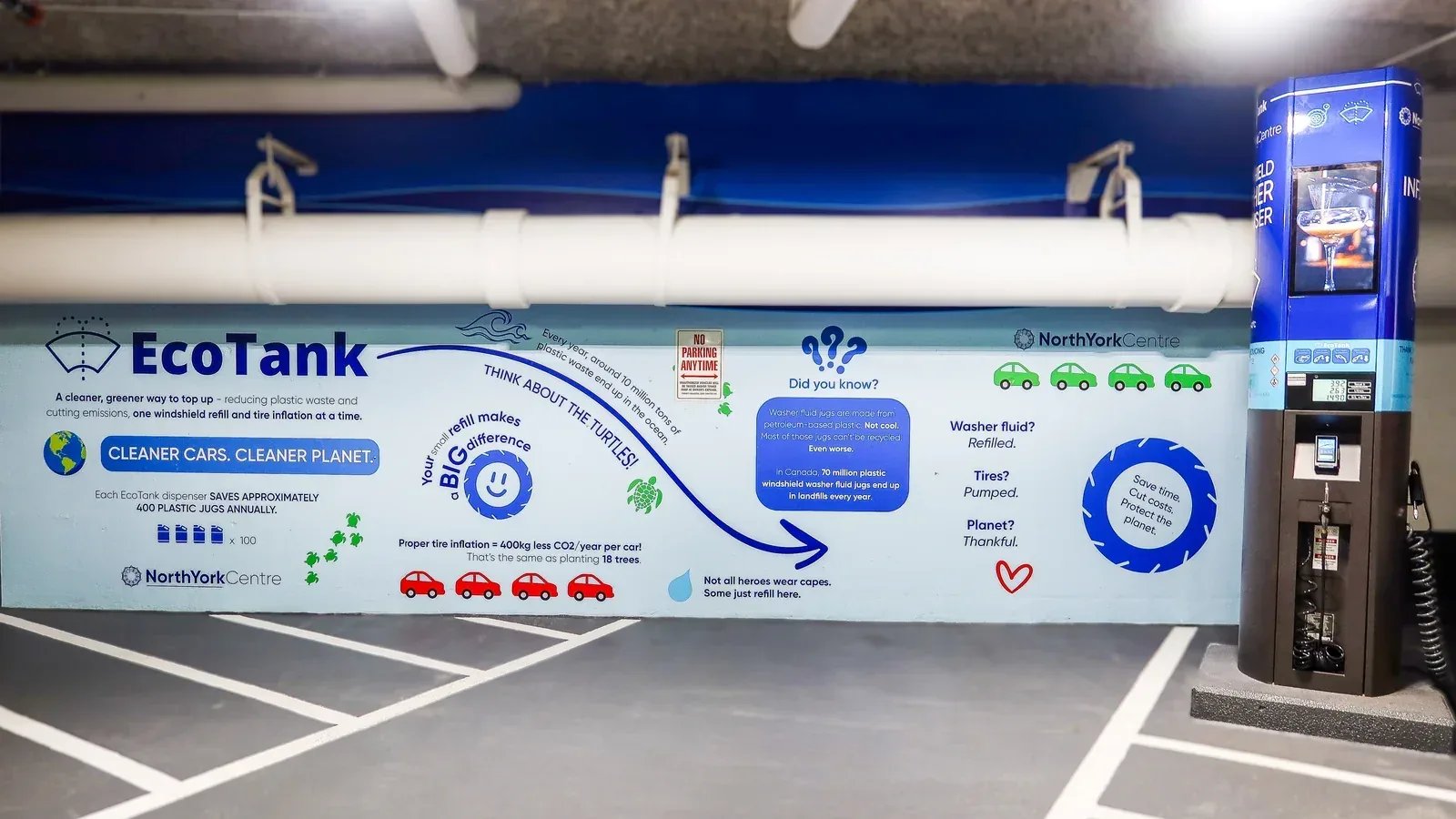
EcoTank uses NuvoLinQ connectivity to keep its smart refill stations and EV infrastructure online in harsh North American winters.